Updates from the Rhine, Meuse and Scheldt Demo Region: setup of the woodchip bioreactor in Vinkenloop demo-site
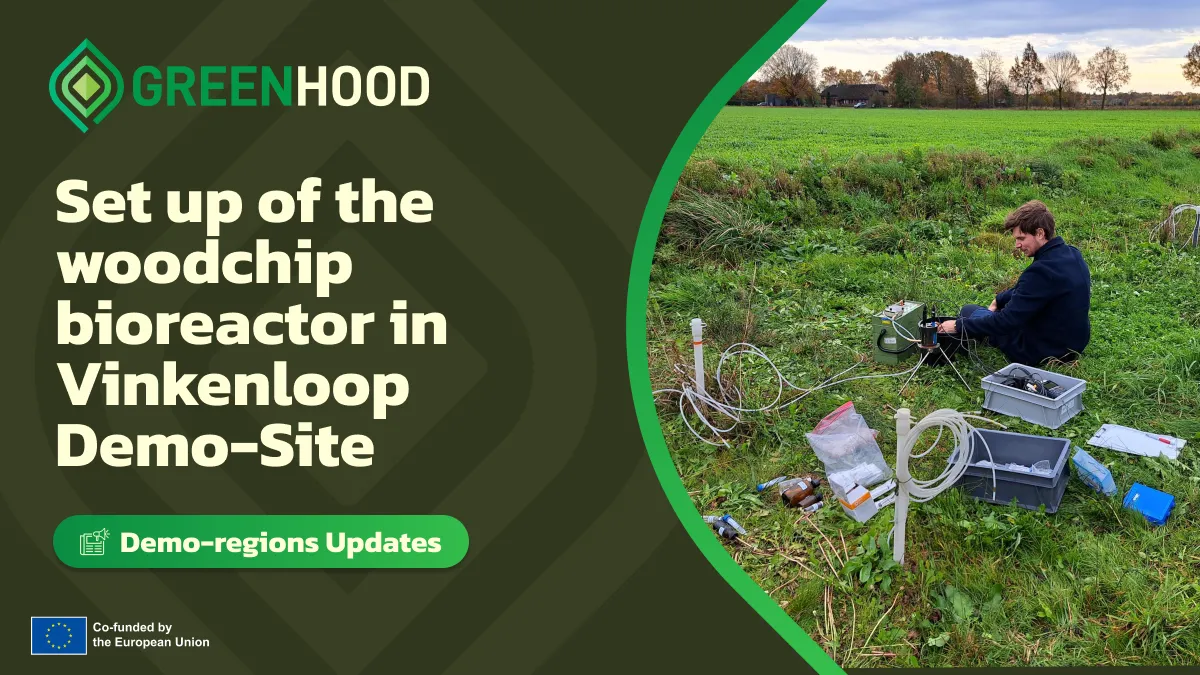
Last November, our partners from Deltares and KWR (Rhine, Meuse & Scheldt River Basin demo region) started testing the woodchip bioreactor in the Vinkenloop demo-site, for the new drainage season.
This area is located in the south-east of the Netherlands, mainly composed by arable and dairy farms, in a small research area where excessive nitrate loads are present in the water system.
What happened?
The woodchip bioreactor has been installed for removing nitrate from the drain water, before this water is discharged into the surface water. This removal occurs with the help of bacteria, which converts nitrate into nitrogen gas. After starting the bioreactor, samples were taken for five days and analysed in the Deltares Delta-lab, with the aim of checking the reaction of different water quality parameters (nutrients and microorganisms) and gaseous substances.
What’s next?
A first analysis of the data taken has been implemented, showing an 80% removal of nitrate into the drain water samples – confirming that the woodchip bioreactor is actually doing its job. However, secondary effects were also observed, and current measurements will improve our understanding of these observations. These results and follow-up research will be showcased to local stakeholders at the beginning of January 2026.
After that, Deltares and KWR will focus on implementing the sedimentation pond within the same area. The sedimentation pond removes phosphorus and organic matter by decreasing the flow velocity, causing particulate organic matter and adsorbed phosphorus to settle onto the bottom of the pond. To understand in detail which processes happen in the pond, the nutrient loads of the in- and outlet will be measured.