Online Summer School Series: Circular Bioeconomy Solutions for European Aquaculture
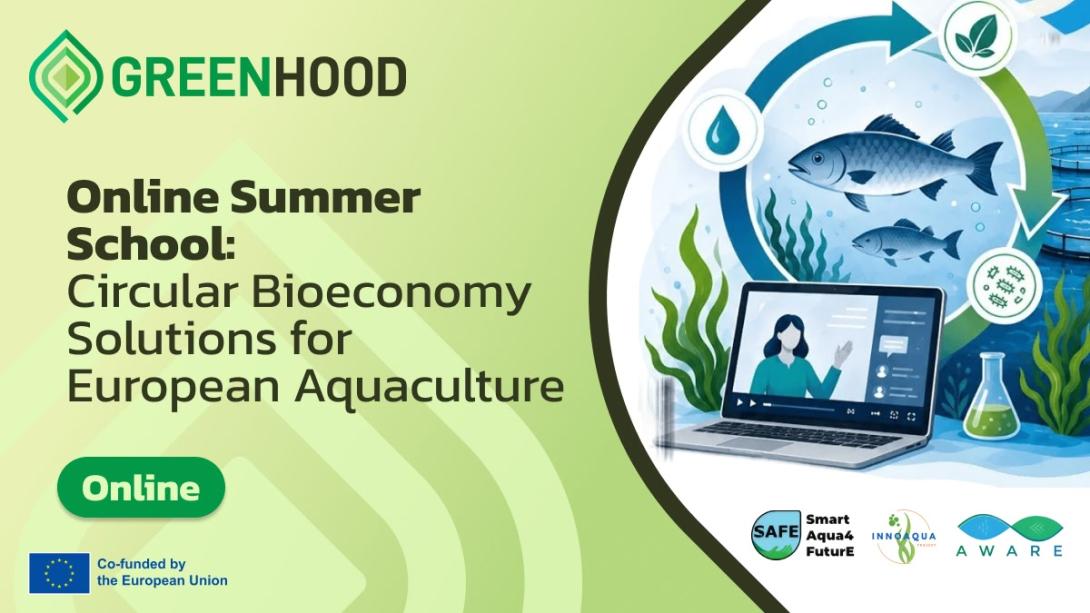
From 15–26 June 2026, GREENHOOD joins forces with the European research initiatives SAFE, AWARE-EU, and INNOAQUA to participate in an online summer school series dedicated to sustainable aquaculture across Europe.
Spread over three free half-day online sessions, this series shares research findings, practical case studies, and technical insights tailored for students, early-career researchers, aquaculture professionals, and interested industry stakeholders.
About the Summer School
As Europe sets more ambitious climate and circularity targets, turning aquaculture by-products into valuable secondary resources is more important than ever. This online summer school brings together the European research community to share recent developments and show how cross-sector innovations can reduce environmental pressure on aquatic ecosystems.
The series is structured around three core thematic sessions:
- Monday 15 June (14:00–17:15 CEST) - Innovations I: Circular solutions, freshwater aquaculture waste valorisation, mealworms in the bioeconomy, and water reuse systems.
- Monday 22 June (14:00–17:15 CEST) - Innovations II: Circular feed ingredients, sludge valorisation, integrated production systems (SMART-IMTA), and bio-based fertilisers.
- Friday 26 June (09:30–12:45 CEST) - Sustainability and Acceptability: EU policy barriers, environmental impact assessments, financial viability, and value chain resilience.
GREENHOOD at the event
GREENHOOD’s participation highlights the project's focus on cross-initiative knowledge transfer and practical, scalable circular bioeconomy solutions within the Trondheim Fjord Basin demo-region.
On Monday 22 June, during the Innovations II session, Hallstein Baarset, GREENHOOD partner from Waister AS, delivers a specialised presentation titled "Biofertiliser from aquaculture sludge".
Drawing directly from operational insights and mutual learning across two EU-funded initiatives (SAFE and GREENHOOD), this session explores how advanced drying and stabilisation technologies can transform fish sludge and agricultural side streams into high-quality organic fertilisers. These innovations open up pathways for shifting nutrients from areas of intensive fish and livestock production out to nutrient-poor soils, helping to rebalance localised regional ecosystems.
How to participate
Participation in the summer school is free of charge, but pre-registration is mandatory for all attendees.
To explore the full programme outline and secure your spot, please register via the official event page.